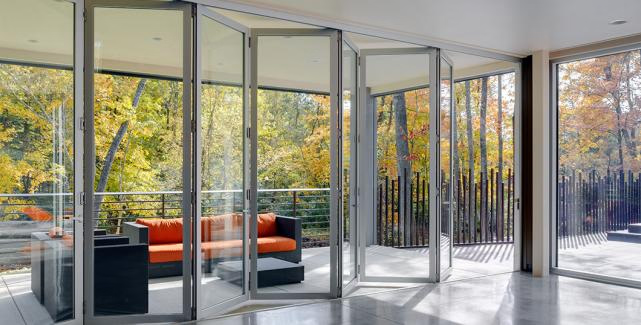
Folding Away the Boundaries: The Rise of Aluminium Bifold Doors in Modern Homes
Walk through any recently renovated home and you’ll likely notice a shift in how spaces connect to one another. Walls that once separated indoor and outdoor areas are being replaced with openings that fold away entirely, creating a sense of flow that feels both modern and effortless. At the centre of this design shift sit aluminium bifold doors — a feature that’s become a defining element of contemporary Australian living.
How Do Bifold Doors Actually Work?
Unlike sliding doors, which move panels horizontally along a track, bifold doors consist of multiple panels connected by hinges that fold against each other, concertina-style, before sliding to one side. When fully opened, the panels stack compactly against the frame, leaving minimal obstruction and an almost wall-free opening.
Choosing aluminium as the frame material brings a specific set of advantages over timber or uPVC alternatives:
- Lightweight yet strong, allowing for slimmer sightlines and larger glass panels
- Naturally resistant to rust, warping, and termite damage
- Low maintenance, typically requiring just an occasional wipe-down
- Available in a wide range of powder-coated finishes to match any design aesthetic
Why Has This Become Such a Popular Choice?
It’s worth asking — what’s actually driving this shift toward bifold systems, beyond simply following a trend?
For many homeowners, it comes down to versatility. A fully opened bifold system can turn a living room into an extension of the backyard, perfect for entertaining or simply enjoying good weather. But when closed, the same doors provide full weather protection, security, and insulation, functioning just like a standard glazed wall.
There’s also a practical design benefit. Because aluminium frames can be manufactured with narrower profiles than other materials, more of the opening is glass rather than frame. This means better views, more natural light, and a cleaner overall look — something architects and designers increasingly prioritise in both new builds and renovations.
Things Worth Thinking About Before You Choose
Before settling on this style of door for your project, a few considerations are worth keeping in mind:
Track and floor design — Bifold systems typically require a track at floor level, which can create a slight threshold. Flush-floor options exist but may involve additional drainage and waterproofing considerations.
Panel configuration — Bifolds can be configured to open from the left, right, centre, or both sides, so it’s worth thinking about how the opening will be used day-to-day, not just how it looks when fully open.
Glazing options — Double glazing, tinting, and security glass are all available with aluminium frames, and the right combination depends on your local climate, orientation, and noise considerations.
A Long-Term Investment in Everyday Living
What makes this style of door stand out isn’t just its appearance — it’s how it changes the way a space is actually used. A room that previously felt closed off can become genuinely multi-functional, adapting to weather, occasion, and lifestyle without any structural compromise.
For homeowners planning a renovation or new build, aluminium bifold doors offer a combination of durability, design flexibility, and everyday practicality that’s difficult to match with other door styles. It’s an investment that pays off not just in how a home looks, but in how it’s lived every single day.