
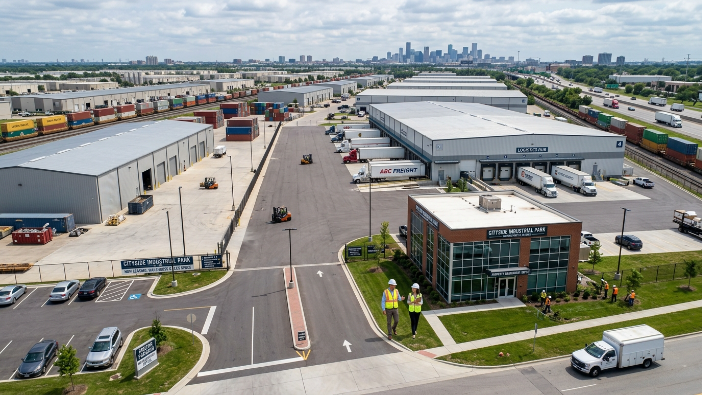
Industrial Property Management: A Different Asset Class That Demands a Different Approach
Industrial property has become one of the most sought-after asset classes in the Australian commercial market over the past several years. Strong demand from logistics, e-commerce, manufacturing, and trade businesses has pushed occupancy rates high and rental growth ahead of other commercial sectors in many locations. But strong market conditions do not manage an asset automatically. Effective industrial property management requires an understanding of how industrial tenancies work, what industrial tenants need from their premises, and how to protect the long-term value of assets that are often structurally and functionally quite different from office or retail property.
What Makes Industrial Property Different to Manage
Industrial properties present management challenges that do not arise in the same way across other commercial asset classes. The buildings themselves are often large, functionally specific structures with significant mechanical and services infrastructure including roller doors, loading docks, high-clearance interiors, three-phase power, compressed air systems, and in some cases purpose-built fit-outs that serve only the specific operations of the current tenant.
Managing these assets requires familiarity with the types of systems involved, the maintenance requirements they carry, and the compliance obligations that apply to industrial buildings under relevant state and local government regulations. A property manager without this background can easily miss maintenance issues or compliance obligations that would be apparent to someone with genuine industrial property experience.
Tenant Relationships in an Industrial Context
Industrial tenants typically operate businesses that are deeply dependent on their premises functioning correctly. A roller door that fails, a loading dock that becomes inaccessible, or a power system that trips repeatedly does not just inconvenience the tenant. It disrupts their operations, potentially affecting their ability to fulfil customer orders, receive deliveries, or maintain production schedules.
Responsiveness to maintenance requests in an industrial setting is not simply a matter of good service. It has a direct impact on how the tenant perceives the value of the tenancy and whether they plan to renew when the lease approaches expiry. Industrial tenants who feel their operational concerns are taken seriously by their landlord and manager are considerably more likely to remain in a property than those who routinely experience slow or inadequate responses to issues that affect their day-to-day business.
Lease Structures and Rent Reviews in Industrial Properties
Industrial leases tend to be longer in duration than retail or office leases, which reflects the cost and disruption involved in relocating a business with significant fit-out, equipment, and operational infrastructure. Lease terms of three to five years with options are common, and the rent review mechanisms built into those leases play an important role in whether the property keeps pace with market conditions over the term.
Fixed annual increases, CPI-linked reviews, and market rent reviews at option exercise all produce different financial outcomes for the property owner depending on how the market moves over the lease period. Understanding which review structure suits the specific asset and market conditions at the time of lease negotiation is an important part of effective industrial property management rather than simply accepting whatever the tenant’s solicitor proposes.
Outgoings Recovery and Cost Management
Industrial leases in Australia typically operate on a net or semi-net basis, meaning the tenant recovers some or all of the property outgoings in addition to the base rent. Managing the outgoings recovery process correctly is important both for the owner’s financial position and for maintaining a transparent relationship with the tenant.
Outgoings that are incorrectly calculated, inadequately documented, or inconsistently recovered create disputes that damage the tenant relationship and in some cases result in the owner absorbing costs that should properly be recovered. A property manager with clear systems for tracking, documenting, and reconciling outgoings removes this risk and ensures the owner is not inadvertently subsidising the tenant’s occupancy costs.
Compliance in Industrial Buildings
Industrial properties carry compliance obligations that extend beyond those applying to standard commercial buildings. Depending on the nature of the tenant’s operations and the design of the building, these may include essential services maintenance and certification, hazardous materials storage compliance, fire suppression system testing, and in some cases environmental obligations relating to the activities carried out on the premises.
Keeping across these obligations and ensuring they are met at the correct intervals is a core function of professional industrial property management rather than an optional add-on. An owner whose property falls behind on compliance obligations faces not only regulatory risk but potential liability if an incident occurs on the premises.
Why Experience in This Asset Class Matters
The specifics of industrial property management are distinct enough from office and retail management that genuine experience in the asset class produces meaningfully better outcomes than general commercial property experience applied to an industrial context. For property owners with industrial assets in Melbourne and surrounding regions, finding a manager who understands the operational realities of industrial tenancies, the maintenance demands of industrial buildings, and the lease structures that protect long-term asset value is one of the most practical steps toward ensuring the investment performs as it should.


