
Pre Pointe Assessment Physio: What Every Dance Student and Parent Should Understand
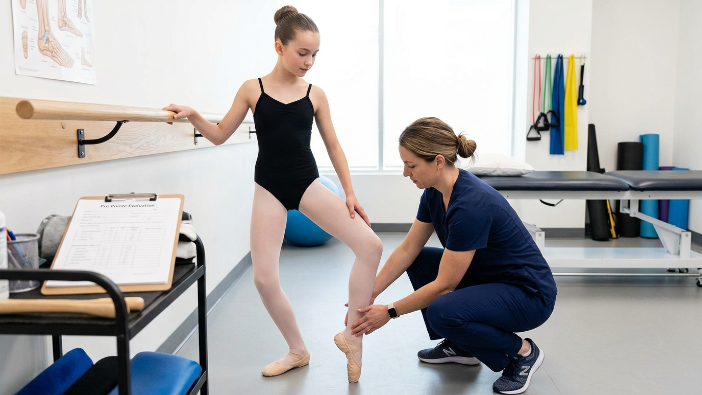
Moving into pointe shoes is a significant milestone in a ballet dancer’s training, and it is one that should be guided by objective physical assessment rather than age or enthusiasm alone. A pre pointe assessment physio evaluation examines the specific physical requirements needed to dance on pointe safely, identifying whether a student’s body is genuinely ready to tolerate the demands that pointe work places on the feet, ankles, and lower limbs. This assessment has become widely recognised as an essential step in responsible dance training, and skipping it carries real injury risk for students who are not yet ready.
Why Readiness Cannot Be Judged by Age or Years of Training Alone
A common misconception is that a dancer who has trained for a certain number of years, or who has reached a particular age, is automatically ready for pointe work. Physical readiness for pointe is not determined by time in the studio. It depends on a set of measurable physical qualities including the strength and endurance of the intrinsic foot muscles, the stability and control of the ankle and knee, the alignment of the lower limb during single leg loading, the flexibility and mobility of the ankle joint, and the ability to maintain correct technique under load.
Two dancers of the same age and training background can show completely different readiness profiles. A pre pointe assessment identifies exactly where each individual sits across these requirements rather than applying a blanket rule that does not account for physical variation between students.
What the Assessment Actually Involves
A physiotherapist conducting a pre pointe assessment physio evaluation works through a structured battery of tests that cover the physical prerequisites for safe pointe work. These typically include:
Assessment of foot and ankle flexibility, specifically the range of plantarflexion available and whether it comes from the ankle joint itself or is compensated by movement elsewhere in the foot. A dancer who achieves a pointe position primarily through mid-foot pronation rather than true ankle range is at higher risk of injury on pointe.
Strength testing of the ankle plantarflexors, the intrinsic foot muscles, and the hip stabilisers that control lower limb alignment. The single leg heel raise test is one of the most commonly used measures, assessing whether the dancer can perform the required number of controlled repetitions with correct alignment and without fatigue-related technique breakdown.
Knee and hip control assessed during single leg standing, relevé, and simple dance-specific movements that reflect the demands the dancer will face in class.
Spinal and core stability relevant to the postural demands of pointe work, since inadequate core control affects how load is distributed through the lower limbs during pointe work.
What Happens When a Student Is Not Yet Ready
A pre pointe assessment that identifies gaps in readiness is not a rejection. It is a roadmap. The physiotherapist identifies specifically which physical qualities need to be developed further and typically provides or refers the student to a targeted strengthening programme addressing those gaps. Most students who are not ready at the time of their first assessment achieve readiness within a few months of consistent targeted training, after which a reassessment confirms whether progression to pointe shoes is appropriate.
This process protects the student from the risk of stress fractures, tendon injuries, and the poor technique habits that develop when a dancer dances on pointe before their body is ready to support the demands involved.
Timing the Assessment Correctly
The ideal time for a pre pointe assessment is before a student begins pointe work, not after issues have already developed. Most dance teachers recommend an assessment toward the end of a dance year or at the beginning of a new training year when the student and their teacher feel pointe work may be approaching. This gives time for any identified gaps to be addressed through a conditioning programme before the start of pointe classes rather than discovering problems once pointe work has already begun.
For parents navigating this process on behalf of their child, engaging a physiotherapist with specific experience in dance medicine and pre pre pointe assessment physio evaluations produces a more accurate and useful outcome than a general musculoskeletal assessment from a practitioner without this specialisation.


